Whether you need polyester webbing to make custom tie-downs, durable heavy-duty nylon straps for the lifting sling, or seatbelt webbing to replace a worn-out harness in your race car, you can find it at lowyusa.com. Lowy webbing is available in a wide range of sizes and assorted colors for use in a variety of applications.
Also, Lowy webbing is ideal for many uses with skiing, hunting,camping and photography. Can be used to replace backpacks, belting, canteen straps and old camera straps.We provide nylon webbing, tubular webbing, polypropylene webbing, cotton webbing, seat belt webbing, polyester webbing,etc. Want to know more? Why not call our product specialists at 866-772-5159 for more information?
Tuesday, September 22, 2015

Thursday, October 31, 2013
2013 IFAI Expo
2013 IFAI Specialty Fabrics Expo: Business to Business Expo, came to a successful end and let me tell you, it was amazing! We met a lot of old & new friends from all over the local business community and exchanged bunches of business cards and information and generally spread the word about Lowyusa. We look forward to doing business with everyone really soon.


Tuesday, September 3, 2013
Practical Applications of 1" Nylon Webbing
The 1" nylon
webbing roll is in great quality, with its breaking strength 1,100 ibs, it is
widely used in heavy tape, straps, clothing, backpacks, etc. Here are some practical
applications in our daily life.

Firstly, I own a vintage garden tractor
that manually starts using a strap. A couple of the straps that I had were lost
or broken. I decided to make my own and use this 1" nylon webbing.. It is
just what I needed for my use. I can simply place a grommet in one end to fit
over the nipple on the starter wheel and attach a commercially made handle or
one made from a large piece of wood dowel and I will have four starter straps
with this heavy webbing. This would be an excellent item to repair backpacks or
other camping equipment too. One roll of webbing should last a long time.
Secondly, I use this webbing to hang my double nest hammock and it works great. The thickness sometimes gets in the way
when tying knots but I'd rather have it be thicker and stronger than too thin
and not strong enough. My setup is as follows:
- I cut the webbing in half and fused the frayed edges
- Tied a small bowline at the end of each half
- When I find a spot to hang the hammock, I wrap each half around the tree/pole of interest, and then pull the loose end through the bowline end
- This creates enough friction to keep the hammock from slipping
- I then tie a slip knot on each half and clip my karabiners into them
- Then I retie and adjust the slip knots as necessary to achieve the optimal tightness
The last application is my backpack that
was in need of having a few extra straps added to it with snap buckles and this
webbing fit the bill perfectly. I sewed the straps on using a Speedy Stitcher.
Once you cut the belt I passed the webbing through a flame to melt the ends and
sealed it with a plier. It was then a simple matter of stitching it all
together. I also made a nice belt for my hiking pants with the webbing and the
snap buckles.
Wednesday, July 31, 2013
What Is a Threaded Tie Down Ratchet
A threaded tie down ratchet is made up with two components, the ratchet and the tie down strap. The tie down strap is attached to the ratchet and the handle of the ratchet pulls and makes the tie down secure. A properly threaded ratchet buckle and tie-down strap will make sure that the cargo is not damaged and that the cargo does not loosen and injure or damage people or property.


Friday, July 12, 2013
Unique Hot Cutter for Webbing

Use with HKP Components for versatile hand-held hot unit for: Straight Cutting, Curved Cutting, Hole Punching, and Slitting
Other popular hot cutters from Lowy:
Production Hot Cutter
Hand Held Hot Knives & Hole Punches
Hot Cutters
Automated Hot Cutters
Wednesday, July 3, 2013
Types of Buckle
Buckles are used for many different types
of webbing straps and on luggage, back packs, hand bags, and industrial textile
products, etc.
There are many different types of buckles made from a variety of materials such as nickel plated steel, Stainless Steel, die cast alloy metal, and various types of thermo plastics such as nylon, acetyl, and other polymers.
The buckles usually fall into three main types.
There are many different types of buckles made from a variety of materials such as nickel plated steel, Stainless Steel, die cast alloy metal, and various types of thermo plastics such as nylon, acetyl, and other polymers.
The buckles usually fall into three main types.
 Snap buckles involve a mechanical latch or
clasp of some type that separates into two distinct pieces, one piece attached
to each end of the belt. One piece will be hollow with an open side, and the
other piece will have a spring clasp. When placed together the belt will
"snap" into place. This kind of buckle is usually made from plastic
and tends to be used on fabric
belts.
Snap buckles involve a mechanical latch or
clasp of some type that separates into two distinct pieces, one piece attached
to each end of the belt. One piece will be hollow with an open side, and the
other piece will have a spring clasp. When placed together the belt will
"snap" into place. This kind of buckle is usually made from plastic
and tends to be used on fabric
belts.
Clip buckles are often used in western
style belts. They consist of a thin metal plate that is fitted over one end of
the belt. At the back of the metal plate is a rail that the other end of the
belt is inserted through. The belt is then secured when in the correct position
by a spring or magnetic clip.
Tang
Buckles
Tang buckles are designed as classic belt
buckles with a metal loop and pin. The tail end of the strap has holes in small
increments, the strap is then threaded through the buckle and the pin is pushed
through the corresponding hole for a good fit.
The type of buckle for each application is determined by the weights and loading on the strap, heavier loads or devices that are meant to protect human safety often require metal buckles that can handle that weight. The heavier metal buckles that we carry are often used for tie-down straps and lashing straps, care should also be taken not to overload the buckles in these applications as well.
The type of buckle for each application is determined by the weights and loading on the strap, heavier loads or devices that are meant to protect human safety often require metal buckles that can handle that weight. The heavier metal buckles that we carry are often used for tie-down straps and lashing straps, care should also be taken not to overload the buckles in these applications as well.
Tuesday, June 18, 2013
The Main Use of Slides & Loops

At present, most straps utilize different
kinds of slides as adjusters. Lowy's slides are most commonly used with rifle
slings, collars, shoulder straps, belts, etc. as a way of adjusting the length
of nylon webbing.
Lowy's loops are usually used as
connectors. They are also widely used together with Velcro straps and metal
fasteners. We provide a large variety of loops in different sizes ranging from
5/8" to 2". Reducing loops can allow you to go up or down in webbing
size. Keepers are designed to hold a second piece of webbing up against the
first, instead of letting it hang free. The common belt or strap is a perfect
example. They can also be used with camera straps, backpack straps, sling
straps, purses, shoulder straps, etc. Tri-loops are most commonly used as a
finishing hardware on straps. The main use of them is to separate straps from a
single to a double, even more! Tri-loops are also famous for being attached to
the end of a strap so it can be hung onto an snap hook, eye hook, spring hook,
or any other hardware for hanging.
Friday, June 7, 2013
The Pros & Cons of Bonded Nylon Thread
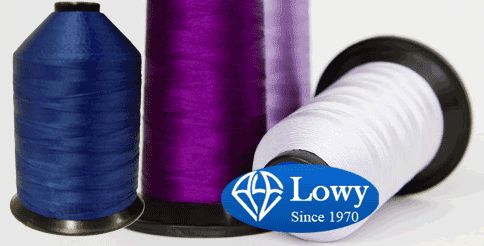
Bonded nylon thread is a wonderful thread
to use widely in our daily lives. Developed
in the 1930's, bonded nylon is a very resilient thread. When compared to
other types of thread, nylon is appreciated because it is extremely strong and
flexible.
There are many advantages and disadvantages
of nylon thread. On the positive side, bonded nylon thread is coated with a
special resin which helps make the thread strong and durable. A
middleweight (Size 92) nylon thread has a tensile strength of about 15 pounds.
At that strength there are very few people who can break it just by pulling. Nylon
thread stretches about 26%. This means that 12 inches of nylon will stretch to
15 inches over time. This is usually good because it lets your seams adjust to
movement and changes in temperature. Additionally, nylon thread is lightweight,
smooth and does not absorb liquid, which is especially important for clothing
applications where underarm seams are prone to weakening because of perspiration.
There are some negative issues with nylon
thread, because it tends to get brittle and turn yellow over time. When used
for seams on clothing, this issue is likely not a problem because of the
overall short lifespan of clothing and the fact that seams are hidden on the
inside of a garment. Nylon thread melts when exposed to the high heat of a
clothing iron. To avoid fused seams, users should be sure to iron items with a
low-temperature iron and with the correct side out, rather than inside out.
Main Uses of Nylon Thread:
Luggage and travel goods
Soft Goods
Outdoor goods and sports equipment
Pet Collars & Leashes
Tie-downs
Cargo Straps & Slings
Harnesses
Leather sewing
Belts
Leather Wear
Furniture Upholstery
Footwear
Tuesday, May 21, 2013
Two Common Types of D Rings

D rings, shaped like a letter D, are a type
of hardware for a variety of uses. They are
available in many different styles, colors, sizes and
either plastic or metal.
Lowy has many different types of D Rings,
including metal D rings for heavy duty applications and plastic D rings for
light duty applications.
Metal D rings are usually used in securing
cargo and vehicles for storage or transport. A common use for metal D rings,
including weld on D rings is for trailers as tie down anchors. Metal D
ring parts and accessories can help you customize your trailer
configuration with load specific trailer tie down anchors. Choosing the right
trailer D rings for your application depends on the functions that your trailer
required - recessed truck tie down rings won't get in the way of rolling cargo
on and off your trailer, rotating anchor rings let you work from multiple
angles to fit a variety of cargo, and surface mount D hooks are great for
lightweight cargo and vehicles - easy access to the folding D ring make quick
work of loading and unloading your trailer.
For light-load applications such as
clothing, backpacks and luggage, D-rings are mostly made of plastics such
as nylon may be used, as they weigh less and are impervious
to rusting. They can be sewn to almost anything including backpacks and
clothing.
When it comes to the use of plastic D
rings, dog collars, double D-ring belts, and utility straps are
at the top of the list. On the utility strap, D-rings are attached to the
end to use as an anchor strap. Dog collars have the D-ring of course, so
you can attach the leash to it with ease. Two D-rings
are sewn onto the end of the webbing or strap to make a cool looking
belt, but can also double as a utility strap.
Wednesday, May 15, 2013
Hook Straps Types
Lowy has two kinds of hook straps for your best choice. They are flat hook straps and wrist hook straps.
A flat hook strap is a strap webbing with flat hooks for the end hardware. One strap utilizes a Flat Hook sewn on one end and a Cam Buckle sewn on the opposite end. The second strap to the set utilizes a Flat Hook sewn on one end. Pull open the Cam Buckle and feed in the loose end of the strap after putting the hooks in right place. It is used for attachment to whatever you want to secure, hold down, etc.. It also works very well as a trunk strap. The vinyl coated flat hooks don't mar your paint job and hold well on the trunk lip. These are good replacement straps for trunk mounted bike racks.
Wrist hook straps offer solid grip support on many different kinds of lifts. The powerful wrist hook straps can be attached to the bar much easier than regular straps. All you do is hook them under the bar, handle and lift. Adjustable Velcro wrist strap is padded with neoprene for comfort and firm fit. With heavy nylon webbing and strong construction, it is great for shrugs, rows, deadlifts, etc.. Keep a super secure grip even when fatigued with the power surge wrist hook straps.

Monday, April 8, 2013
Lowy: Replace a Plastic Buckle for the Backpack
Lowy: Replace a Plastic Buckle for the Backpack: You are hinking in the mountains with your friends and unfortunately, a key plastic buckle goes from your backpack, what should you do? I...
Wednesday, April 3, 2013
Replace a Plastic Buckle for the Backpack
You are hinking in the mountains with your friends and unfortunately, a key plastic buckle goes from your backpack, what should you do?
It's time to replace your plastic buckle! There a are two ways to fix your plastic buckle. One is quick fix which requires a replacement plastic buckle, a pocket knife or lighter.
Steps for quick fix:
1. Match your buckle. The best match, of course, is the same exact type as the original. If there's no replacement buckle, you can use a primarily decorative matching buckle somewhere else on the bag instead, maybe it's your best bet.
2. Check the broken plastic buckle to find the plastic bar which the webbing is looped over. Cut a small gap carefully in the center of the same bar on the replacement buckle.
3. Make the nylon loop through the gap in the bar to attach the plastic buckle to the webbing.
The other way is sewn fix which requires a replacement buckle, Seam ripper, heavy-duty thread and needle.
Steps for sewn fix:
1. Use a seam ripper to remove the stitches to free the old buckle.
2. Fold the end of the webbing through the new buckle and fold the webbing over on itself.
3. Thread the needle and sew both layers of the webbing together.
4. To make the plastic buckle strongly attached, sew almost all the way across the strap, up one edge a little, back across the strap in the other direction, then back down to where you started, forming a rectangle. Then sew an "X" inside the rectangle, connecting the corners. Tie off the last stitch and cut the thread.
Anyway, quick fix is simple and fast while the sewn fix is strong and permanent.
New plastic buckles are widely available and inexpensive. Lowy's full line of plastic fasteners include side release buckles, plastic buckle, double bar buckles, cord locks, d-rings and loops.

Sunday, March 10, 2013
Comparisons for Nylon Webbing, Polypro Webbing, Polyester Webbing
As all of us know, webbing is widely used
in our daily lives. In terms of webbing types, there are nylon webbing, Polypropylene
Webbing, cotton webbing, polyester webbing, etc. Now I would like to have a
discussion about the differences between cotton webbing and nylon webbing.
Nylon webbing is the most abrasion
resistant of all the webbing types. It is flexible, strong, durable, and with a
breaking strength from 1,400 lbs .
to 5,500 lbs ., depending
on the thickness.
Nylon webbing is usually used in straps,
leashes, belts, clothing, packs, bags, safety harnesses, tie-downs, slings,
cargo nets, boat rigging, dog collars and restraints. It also suitable for luggage
straps, backpacks, belts and handbags. For instance, nylon webbing is used as
the core of our fabric-covered designer dog collars and leashes to make sure
our family pets are safe.
Polypropylene webbing,
also known as polypro webbing, is waterproof and UV resistant, but not as
strong as nylon webbing. Both nylon webbing and polypro webbing have the same
melting point of 300 degrees. The easiest way to tell nylon from polypropylene
is to toss a short length of the material in water. Nylon will not float but
Polypropylene will float on water.
Polypropylene webbing
is great for outdoor applications. It is available in 2 styles: Heavyweight,
and Lightweight. The lightweight polypropylene webbing commonly used for
bags, sporting goods, luggage, personal flotation devices, backpacks, children's
products, and general purpose straps. While the heavyweight polypropylene
webbing commonly used for bags, straps, handles, reinforcements, sporting
goods, luggage, backpacks, and general purpose straps.
Polyester webbing is
often used for Cargo tie-downs, slings, climbing straps, seat belt and bag
handles. It is strong and high abrasion resistant. Unlike nylon webbing’s
stretch, it is UV light-resistant and will not rot or mildew. The break
strength for polyester webbing ranges from 1,500
lbs . to 10,000 lbs ..
 |
| Source from www.lowyusa.com |
Friday, December 30, 2011
LowyUSA Webbing Sample
Lowy USA offers a large sample kit,including webbing, zippers, hook and loop, plastic hardware, elastics, para-gear, a very impressive metal hardware lineup, and more.
Also, Lowy USA has a great webbing type and color selection including some of the harder to find webbings such as scuba and seatbelt types.
Get the sample anytime via the website: www.lowyusa.com

Also, Lowy USA has a great webbing type and color selection including some of the harder to find webbings such as scuba and seatbelt types.
Get the sample anytime via the website: www.lowyusa.com

Thursday, October 20, 2011
Get a Stylish Guitar Straps
Guitar straps are made to go over the shoulder and across the chest to assist the guitarist. The two primary types of guitars that use straps are acoustic and electric. These straps, most frequently made from leather or synthetic leather, are also created using nylon webbing, polypropylene and various organic materials. Unless they have been custom made, they are adjustable, usually between 37 and 52 inches to accommodate the length needed for the player. The adjustment method varies from adjusting like the straps on a backpack, to a loop through method with the adjustment slats hidden beneath a sliding shoulder pad.
If you are just beginning to search for guitar straps, the strap should really suit comfortably. should you hold out for hours, possibly rehearsing collectively with your band, the guitar strap demands getting comfortable. glimpse out for padded straps as well as other ergonomic designs.
When shopping for guitar straps, there are three tips to keep in mind. Most straps possess the ability to proceed the buckle and alter the length, but some could possibly be only a tiny fiddly. glimpse out for one that could possibly be adjusted swiftly and swiftly. The strap should be well-padded, as it can be difficult to wear for long periods of time. Try on several types to ensure comfort and fit. If you are a beginner make sure the back of the strap is rough rather than smooth. This will prevent it from sliding on your shoulder.
Though most guitar straps are between two and a half and four inches wide, straps as narrow as one and a half inches are available. This is a very personal choice for the artist, reflecting their unique style and personality. Leather straps can be etched, burnished, or jewel-studded. Next you have to consider pricing. There is a wide range of prices, suitable for almost every budget. Whether you play an acoustic or electric guitar, you will find a variety of strap colors in high quality materials. I have always loved how someone will spend thousands on a guitar, but then by a cheap guitar strap. The guitar strap is to the guitar as rims are to a car. If you have the wrong strap, you just are not the complete package. A stylish guitar strap will help you find the perfect blend of fashion and quality for your personal style.
If you are just beginning to search for guitar straps, the strap should really suit comfortably. should you hold out for hours, possibly rehearsing collectively with your band, the guitar strap demands getting comfortable. glimpse out for padded straps as well as other ergonomic designs.
When shopping for guitar straps, there are three tips to keep in mind. Most straps possess the ability to proceed the buckle and alter the length, but some could possibly be only a tiny fiddly. glimpse out for one that could possibly be adjusted swiftly and swiftly. The strap should be well-padded, as it can be difficult to wear for long periods of time. Try on several types to ensure comfort and fit. If you are a beginner make sure the back of the strap is rough rather than smooth. This will prevent it from sliding on your shoulder.
Though most guitar straps are between two and a half and four inches wide, straps as narrow as one and a half inches are available. This is a very personal choice for the artist, reflecting their unique style and personality. Leather straps can be etched, burnished, or jewel-studded. Next you have to consider pricing. There is a wide range of prices, suitable for almost every budget. Whether you play an acoustic or electric guitar, you will find a variety of strap colors in high quality materials. I have always loved how someone will spend thousands on a guitar, but then by a cheap guitar strap. The guitar strap is to the guitar as rims are to a car. If you have the wrong strap, you just are not the complete package. A stylish guitar strap will help you find the perfect blend of fashion and quality for your personal style.
Thursday, August 4, 2011
Tips to Make Dog Collar with Nylon Webbing
Nylon webbing is constructed from a strong, man-made fabric woven into a flat strip that is often used instead of rope. It is referred to as "webbing" due to the pattern of the mesh in its construction, which resembles a web.
Nylon webbing can be used for many projects; a few of these include climbing harnesses, parachute straps, boat rigging, animal leads, dog collars, backpacks, luggage straps, belts and handbags just to name a few. Where weight-bearing is essential for safety, nylon straps are ideal. Nylon webbing is used as the central part of most fabric-covered designer dog collars and leashes to make sure your family pets are secure. The material is strong and sturdy, which is why it is so widely used.
There are some tips to make dog collar by yourself:
1. First of all, you should fuse the edges of the nylon webbing with a lighter for a few minutes to prevent them from fraying. Or, as an alternative, use waterproof glue to seal the edges.
2. Measure your dog's neck using a tape measure to get exact measurements for the nylon webbing collar.
3. Decide which end is going to be the top side of the buckle and place the nylon webbing through the D-ring, which is a plastic or metal D-shaped ring that fits at one end of a dog collar and is meant to hold the strap in place when it is slipped through it. Then, thread the webbing through the slot of the buckle, which is used to tighten and hold a collar at the other end.
4. Fold the webbing over by about 1 1/2 inches under itself past the D-ring, and then sew a line making sure to keep the layers of webbing directly aligned with one another.
5. Create a rectangle and cross-pattern while sewing the two layers of nylon webbing and go over it at least three times. Then, sew a line over the D-ring using a double amount of thread on the needle, and go back over it again.
6. Decide which end will be the top of your slider, then thread the rest of the nylon webbing up through one slot and down through the other. Afterward, move the slider down by about eight inches.
7 Thread the nylon webbing through the bottom into the first slot and down through the slot closest to the prongs of the other end of the buckle, then slide the buckle section about five inches down.
8. Pull out a loop from the webbing that is already in the slider, and then, from under the slider, thread the nylon webbing up through the slot closer to the buckle. For the final touch, make a large loop through the webbing between the slider and the buckle.


Thursday, May 26, 2011
How to Choose the Correct Webbing for You
Webbing is a light and strong fabric woven as a flat strip or tube of varying width and fibers often used in place of rope. The name webbing comes from the meshed material frequently used in its construction, which looks like a web. Modern webbing is often made from extrodinary high-strength material, such as Dyneema, nylon, polyester, and Kevlar.
Choosing the right webbing is determined by what your application will be.
First of all determine the amount of pressure the webbing will be under in
pounds and check our reference chart to see which webbings fit your range. Then
decide whether your webbing will be used indoors or outdoors.
Flat Nylon Webbing is a very strong webbing that comes in many bright colors, but can fade in the sun after repeated exposure, and can stretch when wet (about 2% the length of the webbing over repeated use). It is commonly used for dog collars and leashes.
Polypropylene Webbing is a lighter duty webbing, but has U.V. Protection, water resistant, and overall is a great outdoor webbing (such as Rafting Straps).It typically comes in more standard colors and has a rough feel if repeatedly used against the skin.
Polyester Webbing or Patterned Polyester Webbing is a great outdoor or
indoor webbing. Polyester is strong but some forms of polyester can bleed their
color in wet conditions. If this an issue in your application make sure you
contact us so we can direct you to the right Polyester before you buy.
Ribbon on Webbing is a new way to get great patterns on durable material. Because the sublimation process is heat intensive patterns that were available in polyester were just not possible for the other material types. Ribbon on Webbing is patterned ribbon sublimated and sewn onto one side of your choice of webbing. All colors are sewn on with our black bonded polyester thread, the sole exception being the Hearts pattern which will use red.
If you have any questions, please visit our website or email us at lowyusa@gmail.com for more details. We will be glad to be of service.
Choosing the right webbing is determined by what your application will be.
First of all determine the amount of pressure the webbing will be under in
pounds and check our reference chart to see which webbings fit your range. Then
decide whether your webbing will be used indoors or outdoors.
Flat Nylon Webbing is a very strong webbing that comes in many bright colors, but can fade in the sun after repeated exposure, and can stretch when wet (about 2% the length of the webbing over repeated use). It is commonly used for dog collars and leashes.
Polypropylene Webbing is a lighter duty webbing, but has U.V. Protection, water resistant, and overall is a great outdoor webbing (such as Rafting Straps).It typically comes in more standard colors and has a rough feel if repeatedly used against the skin.
Polyester Webbing or Patterned Polyester Webbing is a great outdoor or
indoor webbing. Polyester is strong but some forms of polyester can bleed their
color in wet conditions. If this an issue in your application make sure you
contact us so we can direct you to the right Polyester before you buy.
Ribbon on Webbing is a new way to get great patterns on durable material. Because the sublimation process is heat intensive patterns that were available in polyester were just not possible for the other material types. Ribbon on Webbing is patterned ribbon sublimated and sewn onto one side of your choice of webbing. All colors are sewn on with our black bonded polyester thread, the sole exception being the Hearts pattern which will use red.
If you have any questions, please visit our website or email us at lowyusa@gmail.com for more details. We will be glad to be of service.
Thursday, April 28, 2011
Tips On Sewing Nylon Webbing
Nylon webbing is a strong material that can be used for a vast assortment of exercise ideas. Some of these things include seat belt, bagpack, dog collars and straps. If you are a DIY lover, and have some great nylon webbing ideas, you will need to sew nylon pieces or put them together. Here is some tips for sewing the nylon webbing.
You need to choose the right webbing material for your needs, and the length should be longer than you want, for there is often a overlap between the two ends.
Some heavy-duty webbing is very strong, you will have to choose a strong pair of scissors, even nylon webbing cutters to cut it evenly.
To make sure that the ends do not fray, you will have to burn them. When the ends of the material have been burnt, you will need to wait it cool enough to esasily handle.
Finally, to sew the webbing ends efficiently, you will have to choose a heavy-duty thread and a stretch stitch. Then you can set up sewing nylon webbing.
It's just so simple, but it is important to understand how to sew it properly.
You need to choose the right webbing material for your needs, and the length should be longer than you want, for there is often a overlap between the two ends.
Some heavy-duty webbing is very strong, you will have to choose a strong pair of scissors, even nylon webbing cutters to cut it evenly.
To make sure that the ends do not fray, you will have to burn them. When the ends of the material have been burnt, you will need to wait it cool enough to esasily handle.
Finally, to sew the webbing ends efficiently, you will have to choose a heavy-duty thread and a stretch stitch. Then you can set up sewing nylon webbing.
It's just so simple, but it is important to understand how to sew it properly.
Thursday, April 7, 2011
The Types of Metal Fasteners
Generally speaking, metal fasteners are divided into 2 types: permanent fasteners, and non-permanent fasteners. Screws, nuts and bolts, rivets, retaining rings and clamps are examples from the first category. Non-permanent fasteners include quick-release couplers and clamps intended for removal at a specified time and pins, which allow relative movement of fastened parts.
Here are some advantages of both permanent and non-permanent metal fasteners:
Permanent fasteners:
Reduce damage to painted surfaces
Work better with surfaces that need to fit more closely
Eliminate corrosion usually associated with mechanical fasteners
Reduce panel "dimpling"
Fewer stress points from holes drilled to accommodate bolts and screws
Non-Permanent fasteners:
Connected materials can be shifted or changed
Worn or broken fasteners can be more easily replaced
Connections can be broken when needed
Also, metal fasteners can be separated into light duty fasteners and heavy duty fasteners: light duty metal fasteners are great for bags, straps, military/tactical items, pet collars and leashes, medical products, marine and diving items, tent and awning applications, equine items, and firefighter products. Most items are nickel plated and come in various sizes depending on the webbing being used. Black and military plating are also available. Various items are mil-spec. Heavy duty metal fasteners like ratchets, cam buckles, and hooks are designed for aircraft and vehicle cargo applications like tiedowns and restraints.
Here are some advantages of both permanent and non-permanent metal fasteners:
Permanent fasteners:
Reduce damage to painted surfaces
Work better with surfaces that need to fit more closely
Eliminate corrosion usually associated with mechanical fasteners
Reduce panel "dimpling"
Fewer stress points from holes drilled to accommodate bolts and screws
Non-Permanent fasteners:
Connected materials can be shifted or changed
Worn or broken fasteners can be more easily replaced
Connections can be broken when needed
Also, metal fasteners can be separated into light duty fasteners and heavy duty fasteners: light duty metal fasteners are great for bags, straps, military/tactical items, pet collars and leashes, medical products, marine and diving items, tent and awning applications, equine items, and firefighter products. Most items are nickel plated and come in various sizes depending on the webbing being used. Black and military plating are also available. Various items are mil-spec. Heavy duty metal fasteners like ratchets, cam buckles, and hooks are designed for aircraft and vehicle cargo applications like tiedowns and restraints.
Tuesday, March 22, 2011
Is Your Equipment Seat Belt Safe
It is universal that wearing seat belts keep safety, so the seat belts should never be overlooked whether in your car or operating a piece of machine.
Firstly, daily inspection of the seat belts should be part of your work. Is your seat belt fraying? If the seat belt is worn or damaged in any way, then it does not give adequate protection. So the seat belts should be inspected regularly to make sure that they are in safe working order.
What's more, check the date the seat belt was made. Generally speaking, around five years after that date, the belt should be replaced.
To keep safety, you need to wear seat belt whenever you operates a machine. Inspect the seat belt webbing for cuts, especially around the buckle and the end attachment hardware. The seat belt webbing should be flexible. If the webbing is cut or worn, the seat belt can break and cause injury.
Last but not last, check your anti-creep device. You must make sure that the plastic clip on your seat belt webbing will not loosen during working.
Firstly, daily inspection of the seat belts should be part of your work. Is your seat belt fraying? If the seat belt is worn or damaged in any way, then it does not give adequate protection. So the seat belts should be inspected regularly to make sure that they are in safe working order.
What's more, check the date the seat belt was made. Generally speaking, around five years after that date, the belt should be replaced.
To keep safety, you need to wear seat belt whenever you operates a machine. Inspect the seat belt webbing for cuts, especially around the buckle and the end attachment hardware. The seat belt webbing should be flexible. If the webbing is cut or worn, the seat belt can break and cause injury.
Last but not last, check your anti-creep device. You must make sure that the plastic clip on your seat belt webbing will not loosen during working.
Subscribe to:
Posts (Atom)